 tel : +86 595 87817505
 Mobiltelefon : +86 13799577570
 Email : robin@hiway-bags.com





For outdoor brands, a waterproof backpack is more than a storage product. It is an essential piece of equipment that protects users' belongings during hiking, camping, kayaking, cycling, and other outdoor activities. Choosing the right manufacturing partner is therefore important for maintaining product quality, brand reputation, and long-term customer satisfaction.
But what makes a good waterproof backpack manufacturer? Beyond offering waterproof fabrics and competitive prices, a reliable supplier should understand material performance, waterproof construction, functional design, customization, and consistent production quality. These factors help outdoor brands turn product ideas into commercially viable backpacks.
For brands planning to develop a new outdoor collection, here are the key capabilities to evaluate when selecting a waterproof backpack manufacturer.
Understanding Waterproof Materials and Their Applications
Material selection is one of the first things outdoor brands should discuss with a backpack manufacturer. Different outdoor activities require different levels of water protection, abrasion resistance, flexibility, and carrying comfort. A manufacturer should be able to recommend suitable materials based on the product's intended use rather than simply offering the thickest or most expensive fabric.
TPU Materials for Waterproof Backpack Production
TPU (thermoplastic polyurethane) is widely used in waterproof outdoor products because of its flexibility, durability, and water-resistant properties. TPU-laminated fabrics can help protect the backpack contents from rain, splashes, and wet environments when combined with appropriate construction methods.
For products designed for kayaking, fishing, camping, and watersports, TPU-based materials are worth considering. Buyers should also evaluate fabric thickness, coating quality, abrasion resistance, and compatibility with the selected sealing process.
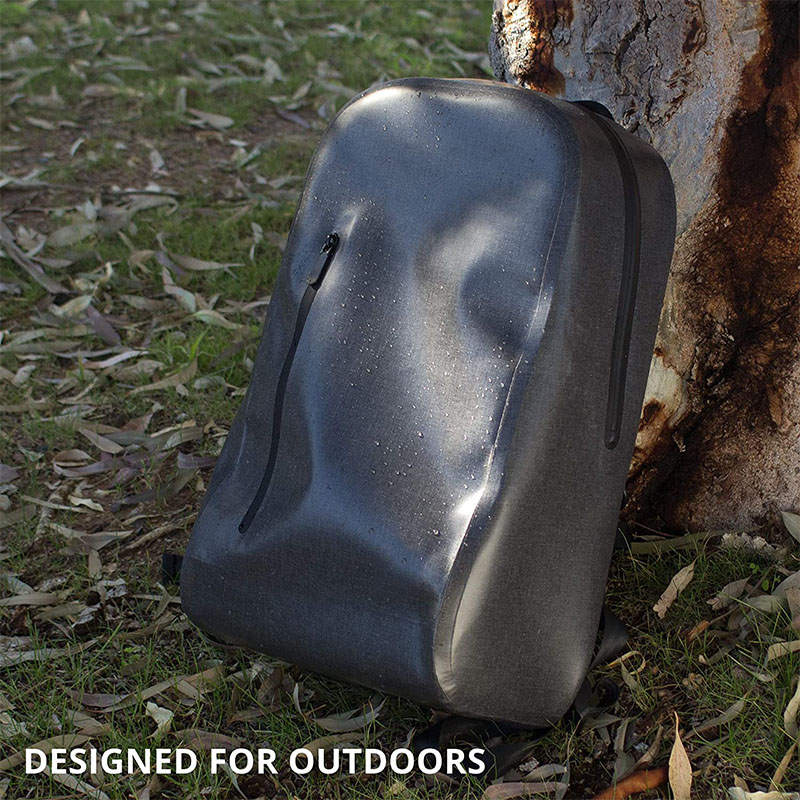
For example, a 20L airtight waterproof backpack developed for outdoor use demonstrates how TPU material and an airtight closure can work together to protect stored equipment.
Choosing the Right Fabric for Different Outdoor Conditions
Not every outdoor backpack needs the same waterproofing level. A hiking backpack designed for occasional rain may use water-resistant fabrics and protective zippers, while a dry backpack intended for kayaking or boating may require TPU-coated materials, sealed seams, and a more secure closure system.
When comparing suppliers, ask about:
- Fabric composition and material thickness.
- Water resistance and waterproof performance requirements.
- Abrasion resistance and tear strength.
- UV exposure and long-term material durability.
- Compatibility with welding, bonding, or stitching processes.
A manufacturer with experience in different bag materials can help brands balance waterproof performance, product weight, durability, and production cost.
Waterproof Construction Matters as Much as Material Quality
Using waterproof fabric alone does not make an entire backpack waterproof. Water can enter through seams, zippers, attachment points, and poorly designed openings. A capable waterproof backpack manufacturer should understand how these components work together to create a protective structure.
High-Frequency Welding and Seam Construction
High-frequency welding is an important manufacturing process for many TPU and PVC waterproof bags. Instead of relying entirely on traditional stitching, the process uses controlled heat and pressure to join compatible material layers, helping create sealed seams.
This construction method is particularly useful for airtight and waterproof products used in demanding outdoor environments. However, welding quality depends on material compatibility, equipment settings, operator experience, and inspection procedures.
Outdoor brands should ask manufacturers whether they can provide welded construction samples and explain how seam integrity is checked during production.
Zippers, Closures, and Waterproof Details
Zippers and closures are often critical points in waterproof backpack design. A standard zipper may provide convenience but does not automatically offer the same protection as an airtight or waterproof zipper system.
Depending on the intended application, manufacturers may recommend:
- Waterproof zipper systems for convenient access.
- Airtight zippers for products requiring a more secure seal.
- Roll-top closures for dry bags and watersports backpacks.
- Reinforced attachment points to improve structural reliability.
- Protective flaps and carefully designed openings to reduce water exposure.
The best solution depends on how the backpack will be used. For example, a hiking backpack and a kayaking dry backpack may have very different closure requirements.
Functional Design for Real Outdoor Activities
A good waterproof backpack manufacturer should understand that outdoor users need more than protection from water. Comfort, storage organization, carrying stability, and accessibility all influence the user experience.
Ergonomic Shoulder Straps and Carrying Comfort
For hiking and trekking backpacks, padded shoulder straps, adjustable chest straps, breathable back panels, and balanced weight distribution can make a noticeable difference during extended use.
For water-based activities, manufacturers may need to consider adjustable carrying systems, reinforced handles, and easy-to-clean surfaces. The design should reflect the actual conditions in which the product will be used.
Storage Capacity and Practical Features
Capacity should match the target activity and customer group. Smaller backpacks may be suitable for day hikes and cycling, while larger designs may accommodate camping equipment, clothing, and other outdoor essentials.
Additional features can include internal compartments, front pockets, hydration compatibility, quick-access storage, and reinforced bases. However, every extra component should be evaluated carefully because additional seams, openings, and attachment points can affect waterproof construction.
Brands developing different outdoor collections can also explore hiking backpacks and airtight waterproof backpacks to compare different product directions.
OEM and ODM Customization for Outdoor Brands
For outdoor brands, a manufacturer's customization capabilities are often just as important as its existing product range. A standard backpack may provide a starting point, but brands usually need their own specifications, colors, logos, functional details, and packaging to establish a recognizable product identity.
OEM Manufacturing Based on Brand Specifications
OEM production is suitable for brands that already have product designs, technical drawings, or detailed specifications. The manufacturer produces backpacks according to the buyer's requirements, including material selection, dimensions, construction, hardware, and branding details.
Before mass production, both parties should confirm the material specifications, product measurements, stitching or welding details, logo placement, and approved sample. Clear documentation helps reduce misunderstandings during manufacturing.
ODM Development for New Product Ideas
ODM services can be useful for outdoor brands that have a product concept but do not yet have a complete technical design. An experienced manufacturer can help develop the structure, select suitable materials, improve functionality, and prepare samples for evaluation.
Customization may cover:
- Backpack capacity, dimensions, and overall shape.
- TPU fabric, lining, and material combinations.
- Color combinations and branded logo applications.
- Shoulder straps, buckles, handles, and other accessories.
- Internal compartments and functional storage layouts.
- Retail packaging and product labeling.
For a clearer understanding of the development process, outdoor buyers can review OEM and ODM bag manufacturing services when planning a custom backpack project.
Quality Control and Waterproof Performance Testing
Consistent quality is essential when purchasing waterproof backpacks in bulk. A product may look well-made in a sample, but the same performance needs to be maintained throughout mass production.
A reliable manufacturer should have clear inspection procedures covering incoming materials, production processes, finished products, and packaging.
What Should Be Checked During Production?
For waterproof backpacks, quality inspection may include:
- Material inspection: Check fabric specifications, coating condition, and surface defects.
- Seam inspection: Examine welded or stitched areas for gaps, weak bonding, and inconsistent construction.
- Closure inspection: Check zipper operation, sealing performance, and opening durability.
- Load testing: Evaluate shoulder straps, handles, buckles, and other load-bearing components.
- Finished product inspection: Check dimensions, appearance, accessories, labels, and packaging.
Ask for Clear Waterproof Testing Requirements
Waterproof performance should be verified against the intended product specification. Depending on the design, testing may involve spray tests, immersion tests, or other agreed methods.
Outdoor brands should not assume that every waterproof backpack is suitable for prolonged immersion. Water resistance, waterproof construction, and airtight protection are different performance requirements. A manufacturer should be able to explain the intended protection level and the test conditions used to verify it.
Before placing a bulk order, agree on the test method, testing duration, acceptance criteria, and inspection records. This makes product quality easier to evaluate and helps avoid disputes after delivery.
Production Capacity, MOQ, and Delivery Reliability
Even a well-designed backpack may not be commercially viable if the supplier cannot meet the required order quantity or delivery schedule. Outdoor brands should therefore evaluate production planning, material sourcing, sampling efficiency, and communication before selecting a manufacturing partner.
Important questions include:
- What is the minimum order quantity for each design?
- How long does sample development usually take?
- What is the estimated mass production lead time?
- Can the manufacturer support repeat orders with consistent specifications?
- How are production delays or material shortages communicated?
For reference, Allbagslife lists a 500-piece MOQ and a 45–60-day production lead time for its 20L airtight waterproof hiking backpack. The actual terms may vary depending on materials, customization requirements, order volume, and production scheduling, so buyers should confirm the details for each project.
Why Work with an Experienced Waterproof Backpack Manufacturer?
Working with a manufacturer that understands waterproof bag construction can simplify product development and reduce potential risks related to material selection, structural design, and mass production.
Hairun Bags specializes in manufacturing a wide range of bags, including airtight TPU dry bags, waterproof backpacks, sports bags, and other outdoor bags. With capabilities in product development, manufacturing, and export, the company supports outdoor brands, wholesalers, and importers seeking customized bag solutions.
For outdoor brands, choosing the right manufacturing partner involves more than comparing product prices. Material expertise, practical design support, flexible customization, consistent quality control, and reliable communication are all important factors in building a long-term manufacturing relationship.
How to Choose the Right Waterproof Backpack Supplier
Before making a final decision, compare potential suppliers using the following checklist:
- Does the manufacturer have experience with waterproof and airtight bag construction?
- Can it recommend suitable TPU or other materials for your application?
- Does it understand welding, sealing, and waterproof closure systems?
- Can it develop samples based on your technical requirements?
- Are OEM/ODM customization and private-label services available?
- Does it have documented quality inspection procedures?
- Can it provide realistic MOQ, sampling, and production schedules?
- Is communication clear throughout product development and order fulfillment?
A good waterproof backpack manufacturer is not simply a factory that can produce a bag that looks waterproof. It is a manufacturing partner that understands how materials, construction, design, and quality control work together. For outdoor brands, choosing the right partner can make product development more efficient and help build a dependable collection for demanding outdoor markets.
Frequently Asked Questions
What should outdoor brands look for in a waterproof backpack manufacturer?
Outdoor brands should evaluate the manufacturer's experience with waterproof materials, welded seams, zipper systems, functional backpack design, OEM/ODM customization, quality control, and bulk production. The supplier should also understand the product's intended outdoor application.
Which material is best for manufacturing waterproof backpacks?
TPU-laminated fabrics are a common choice for waterproof backpacks because they offer flexibility, durability, and water protection. The most suitable material depends on the intended use, required waterproof performance, abrasion resistance, weight, and budget.
What is the difference between a waterproof backpack and a water-resistant backpack?
A water-resistant backpack is designed to reduce water penetration during light rain or splashes, while a waterproof backpack uses materials and construction methods intended to provide a higher level of water protection. Actual performance depends on the fabric, seams, closures, and verified testing conditions.
Can manufacturers customize waterproof backpacks for outdoor brands?
Yes. Depending on the manufacturer's capabilities, OEM and ODM services may include custom dimensions, capacity, TPU materials, colors, logos, compartments, straps, hardware, and packaging. Buyers should confirm the specifications during sample development.
How do manufacturers test waterproof backpacks?
Testing methods may include spray testing, immersion testing, seam inspection, zipper sealing checks, and material performance evaluations. The appropriate method depends on the product design and the waterproof performance agreed upon by the buyer and manufacturer.

